Why You Stay Stuck
Most people try to fix mechanical pain by jumping straight from identifying the problem to doing techniques to solve it. They skip the middle — the analysis, the breakdown, the logic. That makes progress feel random. And for years, I was doing the exact same thing. Which leads me to why I built this.

I Was fed up of guesswork
I had a shoulder issue that followed me for years. I worked with coaches, tried every tool I had, and applied everything I knew. I even went to school for nearly seven years to study osteopathy — and still couldn’t figure it out. Sometimes things worked — sometimes they didn’t. And I had no idea why. That’s what frustrated me the most. Not just the pain — but the randomness. I didn’t want guesswork. I wanted a system I could trust — one that gave me the right answer every time. But everything I found just gave me techniques, drills, or theories. Nothing helped me dissect the problem and understand it on a granular level. So I built one. First, I used it on myself. Then on clients. What used to take weeks to figure out now took days. Sometimes even minutes. But there was a problem: it only worked when I was the one applying it — because the process was still in my head, not in a clear framework others could follow. One day, a client said something that changed everything...
“Sam, I don’t want more moves. I want to learn how to think like you.”
That flipped the switch. I broke everything down — every step, every decision, every pattern I had instinctively used for years. That turned into a roadmap. I tested it live in a workshop. And the feedback confirmed it: this system could help anyone think more clearly about pain, movement, and what to do next.
The Problem-Solving Roadmap is now more than a workshop
It's become a key part of how we teach our 1:1 students to analyze, think, and solve problems with precision.
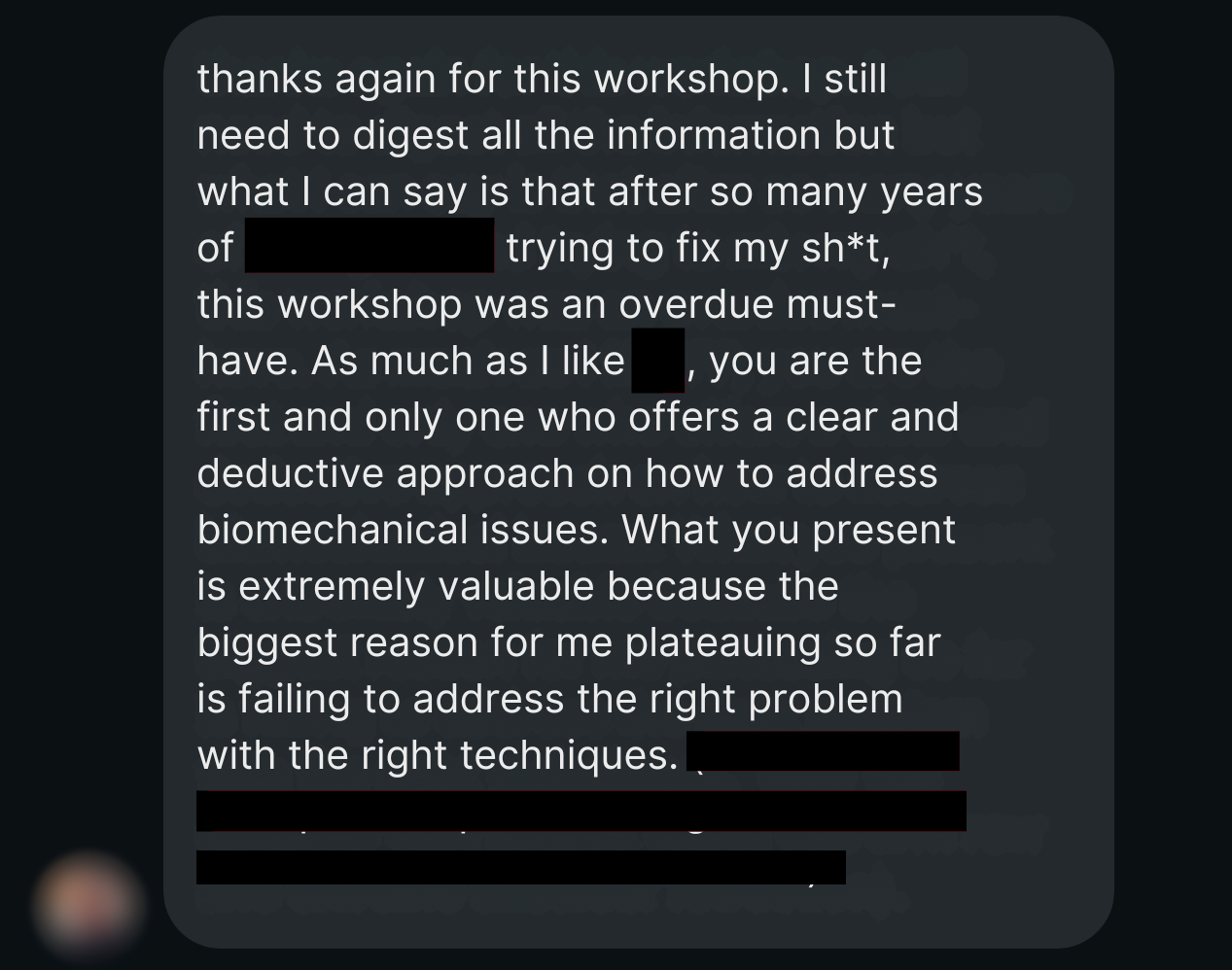
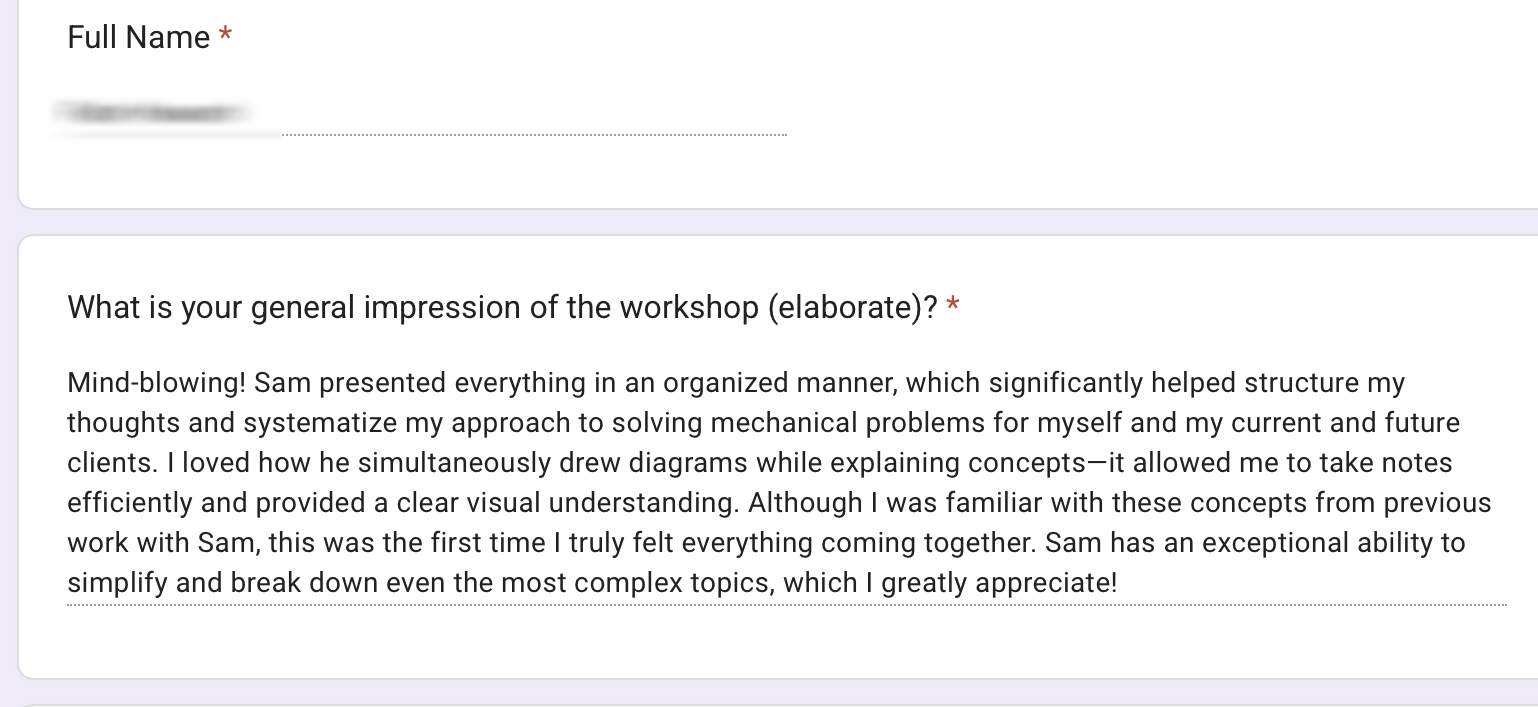
The simplicity of the approach absolutely fascinates me. The roadmap makes it easier to identify how specific variables affect a certain problem without getting confused by an overcomplicated interpretation of the situation at hand. The most insightful was the logic and clarity with which I can now approach the analysis of biomechanical problems. Usually, I tried to apply all sorts of exercises or techniques and hoped that something would cause a change. The success of such an approach is either limited or not sustainable. The workshop provided a much more structured and qualified analysis of the problems I face.
Movement Enthousiast
Movement Enthousiaste
Personal Trainer
Personal Trainer
Kinesiologist and Personal Trainer
The simplicity of the approach absolutely fascinates me. The roadmap makes it easier to identify how specific variables affect a certain problem without getting confused by an overcomplicated interpretation of the situation at hand. The most insightful was the logic and clarity with which I can now approach the analysis of biomechanical problems. Usually, I tried to apply all sorts of exercises or techniques and hoped that something would cause a change. The success of such an approach is either limited or not sustainable. The workshop provided a much more structured and qualified analysis of the problems I face.
Movement Enthousiast
Movement Enthousiaste
Kinesiologist and Personal Trainer
Personal Trainer
Personal Trainer
✅ Who Is This Course For?
• You’re a practitioner or serious non-professional who’s already done the rounds (mobility work, stretching, strength, release, etc.) • You’re not looking for a quick fix—you’re looking for clarity, structure, and real tools to make sense of what’s happening. • You want to understand problems before throwing solutions at them. • You’re willing to think, reflect, and slow down enough to make better decisions.
❌ Who Should NOT Buy This Course
• You’re brand new to movement or looking for a beginner program. • You want a list of exercises to follow without understanding the “why.” • You’re hoping for a plug-and-play protocol to “get rid of pain fast.” • You’re not open to questioning the concepts you currently rely on. • You’re just collecting more content without applying it.
Ready to level up your problem-solving?
Get the roadmap that shows you how to think, test, and adapt.
$265.00